What Is Upcycled Fashion? A Plain-English Guide to Clothes With a Second Life
Every wardrobe holds clothes that are still perfectly good but no longer loved. Upcycled fashion starts from that observation: instead of throwing materials away or melting them down into raw fibre, a designer takes what already exists and turns it into something new and better than it was.
The idea sounds simple, but the word is often used loosely. This guide explains what upcycling really means, how it differs from the terms it is confused with, and how to bring it into everyday style without turning your wardrobe into a costume.
What upcycling actually means
To upcycle is to reuse existing material in a way that increases its value or usefulness. A worn jacket becomes the base of a new design. Fabric that would have been cut off and discarded becomes a patch, a panel or a lining. The material keeps its character, including its colour, its texture and sometimes the marks of its previous life, and the designer builds on those qualities rather than hiding them.
That is the key difference from classic recycling. Recycling breaks a product down into raw material that is processed again, which takes energy and usually lowers the quality of the fibre. Upcycling skips the breakdown and works with the finished material directly.
Upcycling, recycling and second-hand compared
The three ideas are related but not identical. The table shows where they differ.
| Upcycled | Recycled | Second-hand | |
|---|---|---|---|
| What happens to the material | Reworked into a new design | Broken down and processed again | Sold again unchanged |
| Result | A new, usually unique piece | Fibre or fabric for new products | The same item with a new owner |
| Energy needed | Low, mostly manual work | Higher, industrial processing | Very low |
| Uniqueness | High | Low | Depends on the item |
None of these is "better" in every situation. Second-hand is the simplest way to extend a garment's life, and recycling handles material that cannot be reused directly. Upcycling sits in the middle and is the option that adds design and individuality.
Why people choose upcycled clothing
There are three reasons that come up again and again.
- Less waste. Every reworked piece is one fewer item heading to landfill, and the material already carries the resources spent to produce it.
- Real individuality. Mass-produced shirts are identical by definition. A handmade upcycled piece is not, so you are unlikely to meet someone wearing the same garment.
- A story you can tell. People tend to keep and care for clothes that mean something. A piece with a clear author and idea behind it is easier to keep for years.
What to expect from a handmade, upcycled piece
Upcycled clothing is not a factory product, so set your expectations accordingly. Small variations between two items of the same design are normal, because each was made separately. Production can take longer than picking something off a shelf. In exchange you get attention to detail that is hard to achieve in a large production run, and a product with a named author standing behind it.
A short history of reuse in clothing
Reusing textiles is far older than the word upcycling. For most of history, cloth was expensive and labour-intensive to make, so garments were mended, altered, handed down and eventually cut into smaller pieces for patches, quilts and rags. Reuse was not a trend; it was the normal way to treat a valuable material.
Mass production changed that. When clothing became cheap and fast to make, replacing became easier than repairing, and wardrobes filled with items worn only a handful of times. The modern upcycling movement is partly a return to older habits, combined with a designer's eye: instead of simply mending, the maker asks what a piece of material could become.
Common myths about upcycled clothing
Because the term is used widely, a few misunderstandings come up again and again.
- "It is just patchwork." Some upcycled pieces use patches, but many are reworked more thoroughly: re-cut, re-sewn, re-printed or combined with other materials into a coherent design.
- "It looks homemade." Handmade is not the same as rough. The quality depends on the maker's skill, and good finishing is visible in seams, symmetry and details.
- "It is only for people who care about sustainability." Many customers choose upcycled clothing simply because it looks different. The environmental benefit is a bonus, not the only reason.
- "It cannot be washed normally." Most upcycled garments can be washed, but gently. Following the care label and avoiding high heat protects both fabric and print.
How to tell genuine upcycling from a marketing label
The word is attractive to marketers, which means it is sometimes used loosely. A few questions help you judge a product honestly.
- Can the maker explain what the original material was? A real upcycled piece has a traceable starting point.
- Is each piece made individually? Large identical batches are a sign of ordinary production.
- Are the details visible? Photos should show seams, labels and finishing, not only a styled shot.
- Is there a person behind it? A named artist or maker who answers questions is a good sign.
These are not strict tests, but together they give a realistic picture. A brand that is open about its process usually has nothing to hide.
What upcycling does and does not do
It is worth being realistic. Upcycling reduces the amount of new material needed and keeps existing fabric in use, which is a clear benefit. It does not make clothing free of impact: sewing, printing, packaging and shipping still use resources. The most sustainable garment remains the one you wear often and for a long time, so the best upcycled piece is the one you love enough to keep.
How Red+Baron approaches it
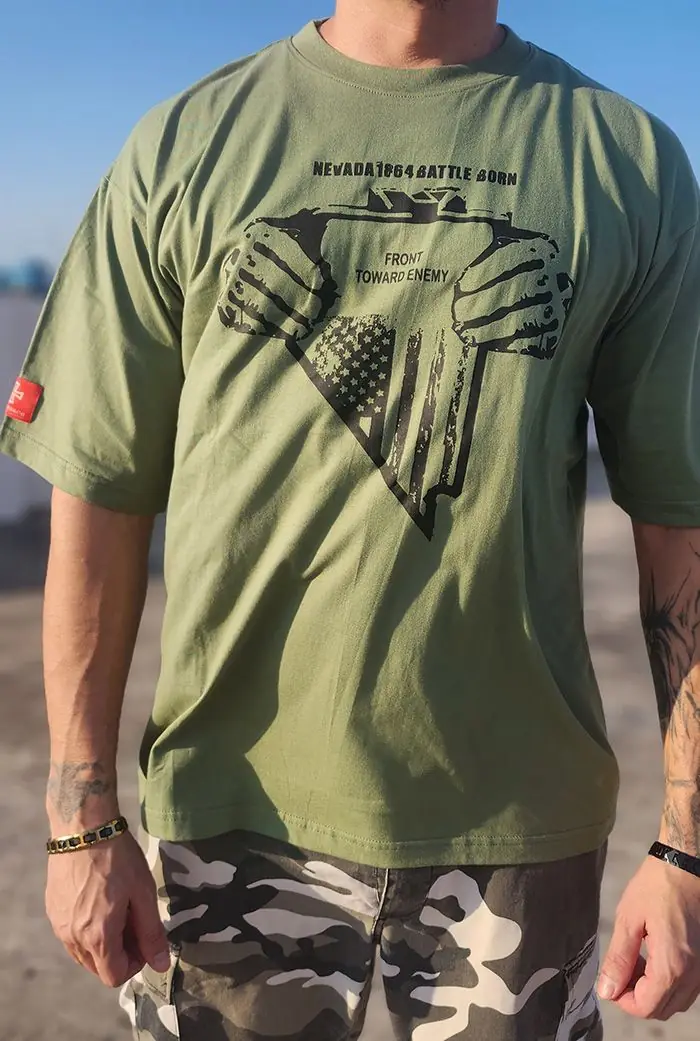
Red+Baron was founded in 2009 by artist T.T. James Gastovski. Every piece in the collection is handmade from upcycled materials, and the designs blend medieval, pseudo-military and sport influences. The result is clothing that is closer to wearable art than to a seasonal trend: T-shirts with strong graphic ideas, jackets, hoodies, shoes, caps and accessories, each with its own character.
How to start an upcycled wardrobe
You do not need to replace everything at once. A sensible way in:
- Begin with one statement piece. A printed T-shirt or a jacket is the easiest first step.
- Build around it with quiet basics. Plain trousers and simple shoes let the upcycled item stand out.
- Learn the care routine. Wash gently, avoid high heat and air dry, so the piece lasts.
- Add slowly. Choose the next item only when you know what is missing.
Ready to see what that looks like in practice? Browse the current designs in the collection below.
FAQ
Is upcycled clothing the same as second-hand?
No. Second-hand clothing is resold as it is. Upcycled clothing is reworked into a new design, so the finished piece is different from the original material.
Are upcycled pieces really one of a kind?
Usually yes. Because they are made by hand from existing materials, small differences between pieces are normal and part of the character.
Is upcycled clothing lower quality?
Not by definition. Quality depends on the materials and the workmanship. Handmade pieces are checked individually, which often helps finishing.